Drive TikTok Traffic to Shopify (Without Getting Flagged)
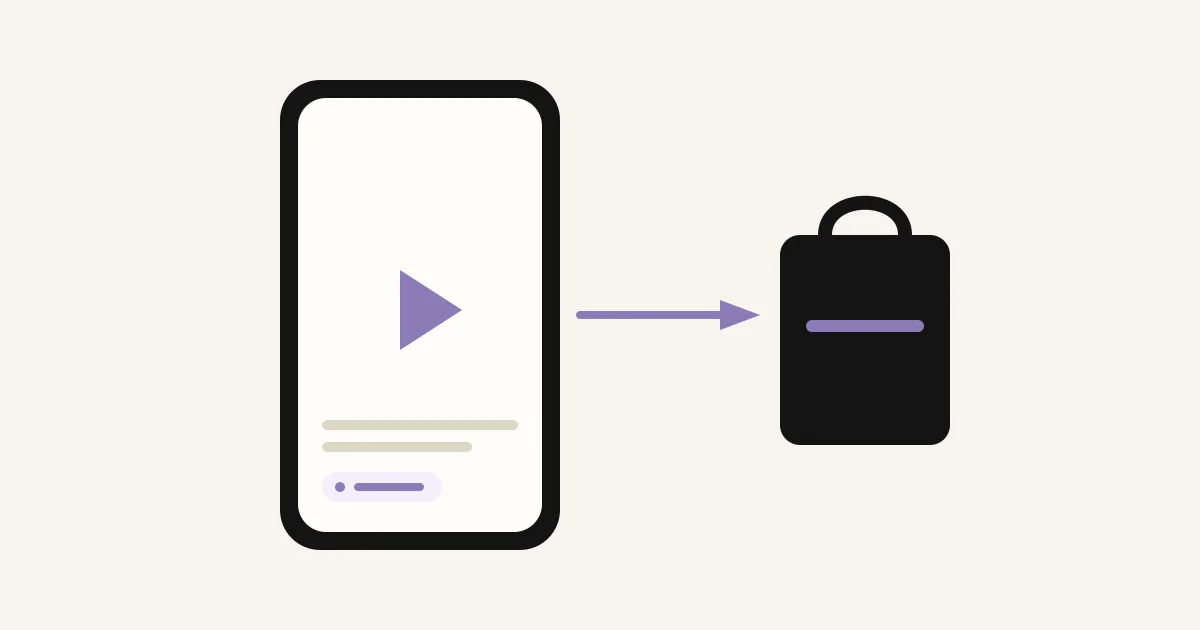
Getting views on TikTok is a content problem. Getting those views to a Shopify checkout is a handoff problem, and it is where most of the traffic dies.
A video can do a million views and send nobody to the store, because the only clickable route is the bio, the caption is not a link, and the in-app browser makes every extra tap expensive. This is the part the growth advice skips: the video earns the attention, and the handoff spends it.
The five routes
| Route | Cost | Checkout happens | Best for | Main risk |
|---|---|---|---|---|
| Bio link | Free | Shopify | Organic posts, small accounts | One extra tap before the store |
| TikTok Shop | Fees and commissions | Inside TikTok | Impulse products | You do not own the customer the same way |
| Spark Ads | Ad spend | Shopify | A post that already worked | Paying to boost a post that did not |
| Creator whitelisting | Product or fee | Shopify | Borrowing an audience | Less control of the message |
| Live shopping | Time | Either | Launches and drops | Stock and moderation |
Pick one route for the first test. Running all five at once produces a number nobody can attribute.
1. The bio link
The bio link is the default route, and most stores waste it on a hub.
Send the link to the product, not to a page of links. A link hub adds a choice between the viewer and the thing the video just showed them. Every additional decision loses people. If you need more than one destination, put the product first and make the others secondary.
Tag the link. A UTM is what lets Shopify and GA4 tell a TikTok visitor from a direct one:
?utm_source=tiktok&utm_medium=social&utm_campaign=serum&utm_content=video-03
Say "link in bio" in the caption and in the video. The caption cannot be clicked, and a viewer who has to hunt for the profile is a viewer you have already lost. The strongest pattern is the video ending on the product with the words "link in bio" on screen, not a 10-second outro.
Test the in-app browser. TikTok opens links in its own browser, on a phone, often on a slow connection. A product page that takes four seconds to load on a desktop emulator can take eight there. The product page checklist covers the mobile speed check; this is the context where it matters most.
2. TikTok Shop
TikTok Shop keeps the checkout inside the app. The shopper taps the product, pays in TikTok, and never meets your Shopify store.
The trade is real in both directions. You get a shorter path to payment and the platform's shopping surface. You give up some margin to fees and affiliate commissions, and you get less of the customer relationship — the email list, the repeat purchase, the data.
It suits impulse products. Low price, visual, easy to understand in three seconds, no sizing decision. It suits a considered purchase less well, because the shopper wants the store's policies, reviews and delivery information before paying.
Do not run TikTok Shop and a Shopify link as competitors in the same video. Pick the destination the video is made for. If the product is on TikTok Shop, the video should sell the in-app checkout; if it is on Shopify, the video should sell the store.
The comparison deserves its own post; the short version is that most small stores use TikTok for acquisition and Shopify as the home base, and only add TikTok Shop when the product fits the in-app impulse.
3. Spark Ads
A Spark Ad turns an organic post into an ad, with the original engagement and profile attached. It is usually the cheapest way to put money behind a video that already proved itself.
Spark the post that worked, not the one you like. If a video got 20,000 organic views and a handful of saves, it has earned a budget. If it got 800 views, paying to show it to more people rarely fixes the creative.
The mechanics: you authorize the post with a code from the account that owns it, then build the ad around it. The engagement travels with the post, which is why it reads as a recommendation rather than a commercial.
Measure the ad on the destination, not the view count. A Spark Ad that doubles views and sends no sessions is a branding test, not a sales channel. The TikTok ads walkthrough covers the campaign settings; this is the handoff after the click.
4. Creator whitelisting
Whitelisting runs ads through a creator's account, so the ad looks like their post rather than yours. It borrows the trust the creator already has.
Give each creator a code. A unique code is the only clean way to know which creator produced sales when the attribution window is noisy. It also gives the creator a reason to mention the code, which is a call to action that survives being screenshotted.
Contract for usage rights before the post goes up. Whitelisting means the brand runs ads from the creator's handle; the creator needs to agree to that in writing, for a defined period. A free product is not a licence to run someone's face as an ad forever.
Do not script the post. The reason whitelisting works is that it does not look like your ad. A creator reading your copy is a creator whose audience can tell.
5. Live shopping
Live is the route with the shortest distance between "I want that" and "I bought it": the product is shown, the link is pinned, the questions are answered in real time.
It works for launches and drops. A restock, a new colour, a limited run. It works less well as a weekly habit for a store with one product and no news.
Prepare the boring parts. Stock, the pinned product link, a moderator for questions, and a plan for what happens when the item sells out mid-stream. A live that runs out of stock in the first ten minutes is a success with a customer-service problem attached.
The replay is the asset. The live itself reaches the people who showed up; the replay and the clips reach everyone else. Cut the three best minutes into a normal post.
What actually gets a post flagged
There is no official "shadowban" switch, and "TikTok hates links" is not the rule. The pattern is narrower: TikTok removes or limits behavior that looks like spam or a scam.
- Spam and fake engagement. Repetitive comments, follow-for-follow, bought likes, the same link dropped in dozens of videos. This is the most common way a new account gets its reach cut.
- Misleading claims. Health claims, income claims, "guaranteed results", fake countdowns and invented scarcity. The product page's honesty rules apply to the video too.
- Restricted products. Weapons, vapes, some supplements, medical devices, and anything else on the commerce policy. Check the category before you build the content.
- Off-platform payment requests. "Pay me on PayPal" or a bank transfer in a DM reads as a scam, because it usually is.
- Music without commercial rights. A personal account can use a trending sound; a business account and an ad need the Commercial Music Library. A video muted by a rights claim cannot send anyone anywhere.
The practical rule: if the post would look like a scam to a stranger, it will look like one to the platform. A normal post that says "link in bio" is not the problem.
Attribution without lying to yourself
TikTok is hard to measure because the click happens inside an app, on a phone, often in a browser that strips the referrer. Four signals, used together:
- UTM on every bio link and ad destination. This is the only way to see the traffic in GA4 as TikTok rather than direct.
- The TikTok pixel and Events API for ads. Understand the window you are reading: seven-day click and one-day view is the usual default, and it is not the same as a same-day report.
- A unique code per creator or video. Codes survive the attribution gap because the customer types them at checkout.
- One post-purchase question: "Where did you hear about us?" It is imperfect, but it catches the word-of-mouth and the "saw it on TikTok, googled the brand" path that no UTM will.
Do not judge a video on same-day sales. A TikTok video can sell for a week, and the direct traffic it produces often looks like a brand search two days later. Give a test seven days before deciding.
The landing page is half the handoff
The video made a promise. The page has one screen to keep it.
- Match the product, not just the brand. If the video showed the serum, the link goes to the serum, not the homepage.
- Lead with the same visual. The shopper should recognise the thing they clicked on before they scroll.
- Make the buy box survive the in-app browser. Price, availability, shipping and add-to-cart in the first screen, on a phone. That is checks 1–5 of the product page checklist.
- Expect a lower conversion rate than your other traffic. A cold TikTok visitor is earlier in the decision than an email subscriber. If the store converts at 2% overall, the TikTok segment may convert at 0.5% and still be profitable.
A one-week test
One product, three videos, one route, one number.
| Day | Action | What you are measuring |
|---|---|---|
| 1 | Pick the product and the route | The destination is decided before the content |
| 2–4 | Post three videos with the same product, different hooks | Views per video; saves and shares, not likes |
| 5–7 | Read sessions, add-to-carts and orders from that route | Whether the handoff works, not whether the video did |
The decision rule is two questions:
- Are views becoming sessions? If 1,000 views produce 10 sessions, the handoff is broken — the link, the caption, or the destination.
- Are sessions becoming orders? If 100 sessions produce one order, the page is doing its job. If they produce none, the page or the offer is the problem, and more views will not fix it.
If the first test fails, change one thing: the route, the hook, or the page. If it succeeds, put money behind the video that worked with a Spark Ad, and only then consider scaling.
FAQ
Can I put a clickable link in a TikTok caption? No. Captions are not clickable. The routes out of TikTok are the bio link, a TikTok Shop product link, an ad destination, or a direct message. Everything else is a person reading your caption and typing the brand name into a browser.
Does TikTok suppress posts that link to a Shopify store? There is no blanket penalty for linking out. TikTok removes or limits behavior that looks like spam or a scam — fake engagement, repetitive link drops, misleading claims, restricted products and off-platform payment requests. A normal post that says "link in bio" is not the same thing.
How do I track TikTok traffic in Shopify? Use a UTM on the bio link, install the TikTok pixel for the ad side, give each creator or video its own code, and ask one post-purchase question about where the customer heard about you. No single one of those is complete, because the in-app browser loses referrers.
Should I use TikTok Shop or send people to my Shopify store? TikTok Shop suits impulse products and shoppers who already buy inside the app. Sending people to Shopify keeps the margin, the customer relationship and the email list. Most small stores end up running both: TikTok for acquisition, Shopify as the home base.
How many views do I need to get a sale from TikTok? It depends on the conversion rate and the handoff. At 1–3% conversion, 1,000 views that produce 10–30 sessions might produce no sale at all; the useful question is whether the views are turning into sessions, and whether those sessions reach the product page.
Written by Mehmet Tekin, 20 November 2026. Policy categories are from TikTok's community guidelines and commerce policy, read 20 November 2026. I build Sold So Many, a Shopify social proof app — the landing page section is where that becomes relevant, and the rest is about the handoff.
Written by
Mehmet Tekin
Founder, Sold So Many
I build Sold So Many, a Shopify app that shows shoppers real sold counts and live cart activity from a store's own orders. I have been shipping Shopify apps since 2024 and write here about social proof, urgency and conversion.
Related reading
- Shopify Product Page Checklist: 23 Checks Before Traffic
Twenty-three checks, ordered by how often they fail: price, shipping, proof, media, variants, mobile and checkout. Each one has a pass/fail test.
- How to Make a TikTok Ad in 2026 (Step by Step)
A 2026 walkthrough of TikTok Ads Manager: objective, ad group, creative specs and the first two seconds that decide whether the ad is worth running.
- Why Is My Shopify Conversion Rate Low? A 7-Point Diagnosis
Seven numbers, checked in order: traffic quality, product page reach, add to cart, checkout, device and customer type. Find the leak before you redesign.