How to Get Your First 100 Sales on Shopify (Without Paid Ads)
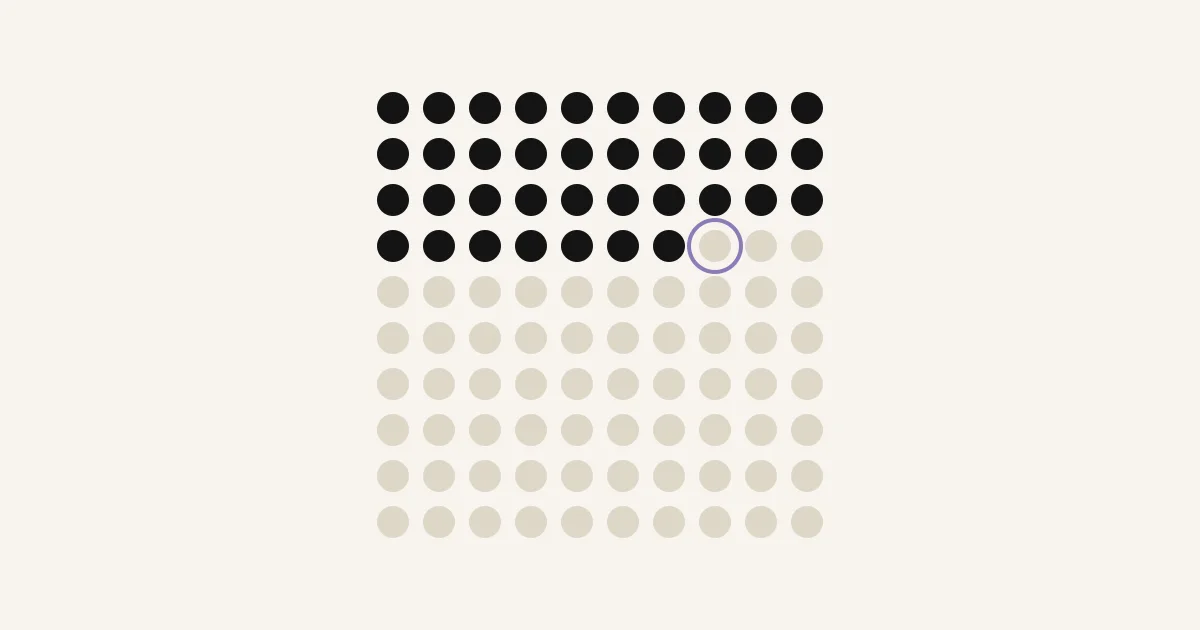
The arithmetic is the part nobody puts in the launch post. At a 1.5% conversion rate, 100 orders need about 6,700 sessions; at 3%, about 3,300. A store with no audience does not get 6,700 sessions by announcing itself.
So the first 100 sales do not come from traffic. They come from people who already trust you, and from audiences someone else already built. That is slower, more manual and less scalable than the course advertises — and it is the only version that reliably works.
The arithmetic, before the tactics
| Conversion rate | Sessions needed for 100 orders |
|---|---|
| 1% | 10,000 |
| 2% | 5,000 |
| 3% | 3,333 |
If your store is at 1%, the question is not "how do I get 10,000 visitors" — it is "how do I get 100 orders from 300 people who trust me?" A hundred sales from a small, warm audience is a realistic first milestone. Ten thousand cold sessions is a marketing budget.
That is why the sequence below moves from warm to cold: people who know you, then communities, then borrowed audiences, then the visitors you already had. Each stage is harder to scale and easier to learn from.
| Stage | Source | What it takes |
|---|---|---|
| 1–10 | People who know you | A direct message, a weekend |
| 11–30 | Communities you are already in | A month of participation, then a post |
| 31–60 | Micro-creators | Ten outreach messages, three to six weeks |
| 61–100 | Past visitors and buyers | Email, reviews, a page that answers objections |
This is a sequence, not a guarantee. Some stores skip a stage because they already have an audience. Some stay in one stage longer. The point is to know which stage you are in, and to do the work of that stage rather than buying ads to skip it.
Sales 1–10: people who know you
This is the stage everyone is embarrassed by, and it is the one that teaches you the most.
Ask for feedback, not a favour. "Support my small business" puts a friend in an awkward position: they either buy something they do not want or say no to you. A message that asks for a look is easier to answer and gives you something useful.
A script that works:
Hey [name] — I've started selling [product]. It's [one sentence: what it is and who it's for]. I'm asking a few people I trust to look at the page and tell me what's confusing, not to be nice about it. If it's useful to you, here's the link: [link]. If not, no problem at all.
Ask the question that becomes your product page. After they buy — or after they decline — ask: "What almost stopped you?" The answer is usually one of the objections the page does not answer: the price, the delivery time, the size, the return policy. Write it down. That sentence becomes the next version of the page.
Do not fake the proof. A friend's purchase is a real sale; a friend's five-star review they do not mean is a lie with a date on it. If you ask for a review, ask for an honest one, and disclose the relationship if it is not obvious.
What not to do: buy your own product to show a sale, ask for reviews in exchange for a discount, or treat your friends as a market. Ten sales to people who know you is a start, not a business.
Sales 11–30: communities you are already in
The rule is simple and almost nobody follows it: contribute for a month before you link.
A community can tell the difference between a member and a marketer in about two posts. Join, answer questions, share what you know without a link, and only then mention the product when it is genuinely relevant.
Where to look: the hobby forum for what you sell, the professional group for the problem it solves, the local group for the city you ship from. One community at a time. Five communities joined in a week is a spam campaign with extra steps.
The post that works is a story with a result, not a link drop:
I bought [product] because [problem]. Three weeks later, [what changed]. Here's a photo. I wrote up the details here if anyone is looking for the same thing: [link].
The link is secondary. The story is the reason anyone clicks. If the community does not allow links, answer in the thread and let people ask.
What gets you banned: joining to promote, DM blasts, multiple accounts, and posting the same link in five groups on the same day. The short-term reach is not worth losing the community.
Sales 31–60: ten micro-creators
A micro-creator is not an influencer campaign. It is ten people with a small, engaged audience that overlaps yours, each trying the product and saying what they think.
Pick by engagement, not follower count. A 2,000-follower account with comments from real people is worth more than a 100,000-follower account with no replies. Look at the last ten posts, not the bio.
Offer product, not cash, and ask for honesty. A brief, not a script:
Hi [name] — I make [product] for [use case]. I'm looking for ten people who [do the thing] to try it and post honestly. I'll send it free, no script and no approval — if it's not for you, tell me and I'll stop. Interested?
The deal: free product, an honest post, an affiliate code so you can see what it produced. No approval over the caption, no requirement to be positive. A creator who says "this wasn't for me" is still doing you a favour; the audience remembers the honesty.
What to track: code uses and link clicks, not likes. Ten creators producing three sales each is thirty sales. Ten creators producing a hundred likes each is a content library.
What not to do: pay for a post without a code, ask for a positive review, or send product to someone whose audience has nothing to do with the product.
Sales 61–100: the visitors you already had
By now you have buyers, a few reviews, and people who visited and did not buy. This stage is cheaper than the first three because the audience already exists.
Email the buyers. A short note seven days after delivery: "How's it going? If it's working, would you leave a review? If not, tell me what's wrong and I'll fix it." No discount for the review — an incentivised review is a bought review, and the platforms treat it that way.
Give the buyer a reason to refer, not a reason to buy again. A friend code — "give $10, get $10" — turns a happy customer into a source. It costs margin only when it produces a sale you would not otherwise have had.
Fix the second visit. A visitor who came back is already interested; the page has one more chance to answer the objection that stopped them. The 23-check product page checklist is the list for that, and the seven-point diagnosis tells you which step is leaking.
A giveaway is a list, not a sale. If you run one, design it so the entry is tied to an order or a referral, not a follow. A giveaway that drives revenue is a different mechanic from a prize draw.
What to do the day each sale lands
Four things, every time:
- Note the source. Friend, community, creator, returning visitor. After twenty sales you will see which stage is actually producing.
- Ask "what almost stopped you?" The answer is your next page edit and your next email.
- Ask for the review at delivery, not at checkout. The product has to arrive before anyone can have an opinion.
- Put the proof where the next shopper will see it. A real sold count or a review beside the buy box is the compounding asset. How to show units sold covers the honest versions, and how to tell real social proof from fake is the test to run before adding anything.
Each sale makes the next one easier, because the page stops being a claim and starts being evidence.
What not to do
- Do not buy followers or reviews. It is the one mistake that is hard to undo, and the platforms are better at detecting it than the sellers are at hiding it.
- Do not launch with a discount to strangers. A launch discount teaches the first customers that the real price is temporary, and it attracts the people least likely to return.
- Do not run ads before the page converts. Ads multiply whatever the page does, including the leak. You will spend money to learn what the first ten buyers could have told you for free.
- Do not wait for the perfect brand. The first version of the page, the packaging and the photos will be worse than the second. Ship, ask, fix.
- Do not treat friends as a market. They are a test panel and a source of honest objections, not a distribution channel.
When to stop doing it manually
At around 100 sales you have three things a new store does not: proof that people buy, a page that has been tested against real objections, and at least one source that produces sales more than once.
That is the point to start paying for reach — ads, creators at scale, SEO — because you now know what a customer costs and what the page does with one. Before that, paid traffic is a guess with a budget.
The first 100 sales are not a marketing strategy. They are the evidence that lets you build one.
FAQ
How long does it take to get 100 sales on Shopify? For most stores doing it manually, one to three months of consistent work. It depends on the product, the price, the founder's existing network and how many communities they are already part of. Anyone promising 100 sales in a week is selling a course, not a result.
Do I need paid ads to get my first sale on Shopify? No. Ads amplify a page that already converts; they do not fix one that does not. The first sales usually come from people who already trust the founder or from an audience someone else built, which is slower but cheaper to learn from.
How do I get sales with no audience at all? Start with the ten people who know you, then twenty from communities you are already part of, then thirty through micro-creators, then the visitors you already had. One stage at a time, and one channel at a time, so you can tell what worked.
Is it okay to ask friends and family to buy from my Shopify store? Yes, if you ask for honest feedback rather than a favour, disclose the relationship, and never ask them to leave a review they do not mean. A friend's real objection is worth more than a friend's pity purchase.
When should I start paid ads? When the product page converts a reasonable share of its own traffic and you know your margin per order and the cost you can afford to acquire a customer. For most stores that is after the first twenty to a hundred sales, not before the first one.
Written by Mehmet Tekin, 20 November 2026. The arithmetic uses an illustrative conversion rate; the conversion-rate diagnosis covers where the real number comes from. I build Sold So Many, a Shopify social proof app — which is why this post tells you not to install one until you have proof to show.
Written by
Mehmet Tekin
Founder, Sold So Many
I build Sold So Many, a Shopify app that shows shoppers real sold counts and live cart activity from a store's own orders. I have been shipping Shopify apps since 2024 and write here about social proof, urgency and conversion.
Related reading
- Shopify Product Page Checklist: 23 Checks Before Traffic
Twenty-three checks, ordered by how often they fail: price, shipping, proof, media, variants, mobile and checkout. Each one has a pass/fail test.
- Why Is My Shopify Conversion Rate Low? A 7-Point Diagnosis
Seven numbers, checked in order: traffic quality, product page reach, add to cart, checkout, device and customer type. Find the leak before you redesign.
- A Shopify Giveaway That Drives Revenue, Not Just Emails
Entries earned with orders, referrals and spend thresholds turn a Shopify giveaway into a revenue campaign. Here is how to run one and keep the audience.