10 min read
How M&S, Amazon and SHEIN Do Social Proof
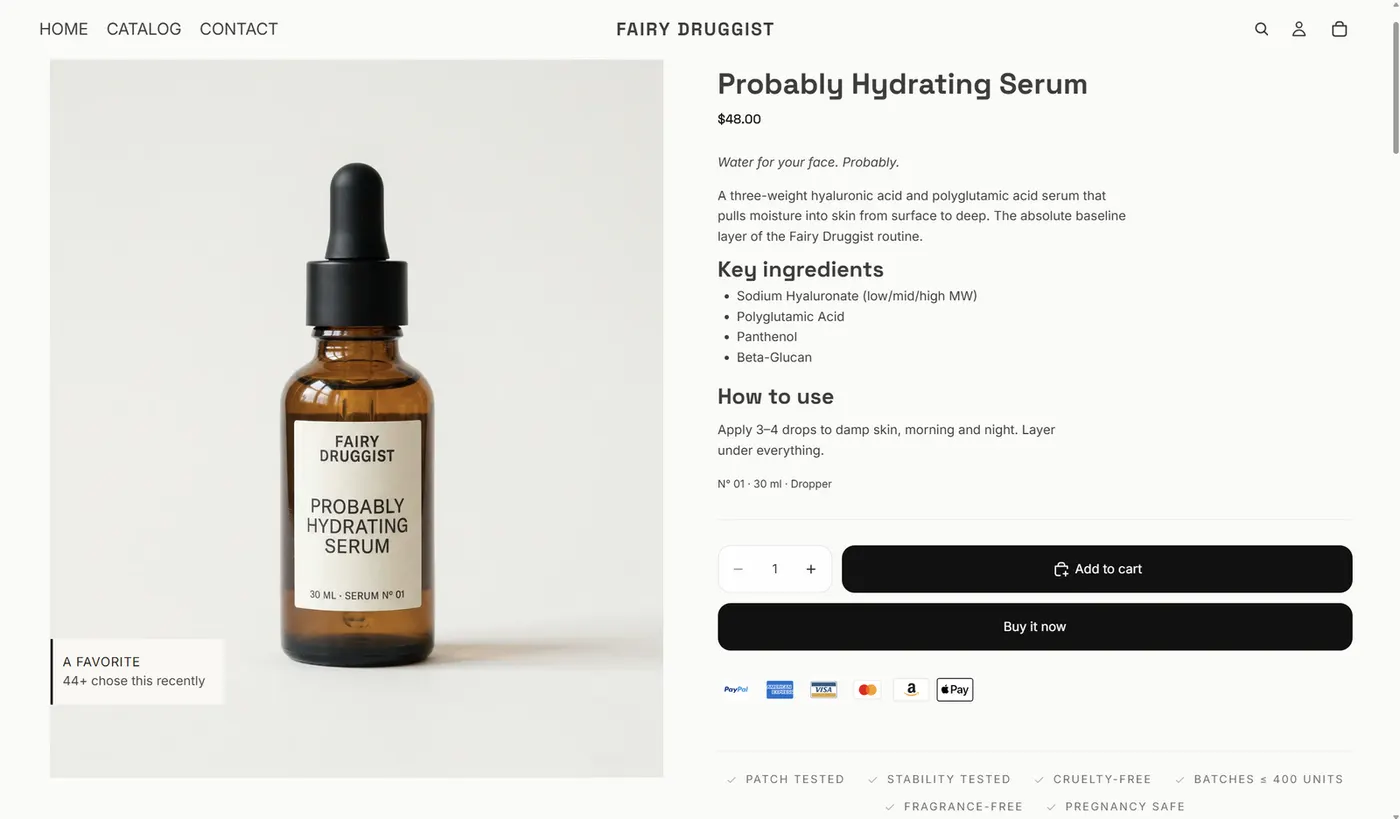
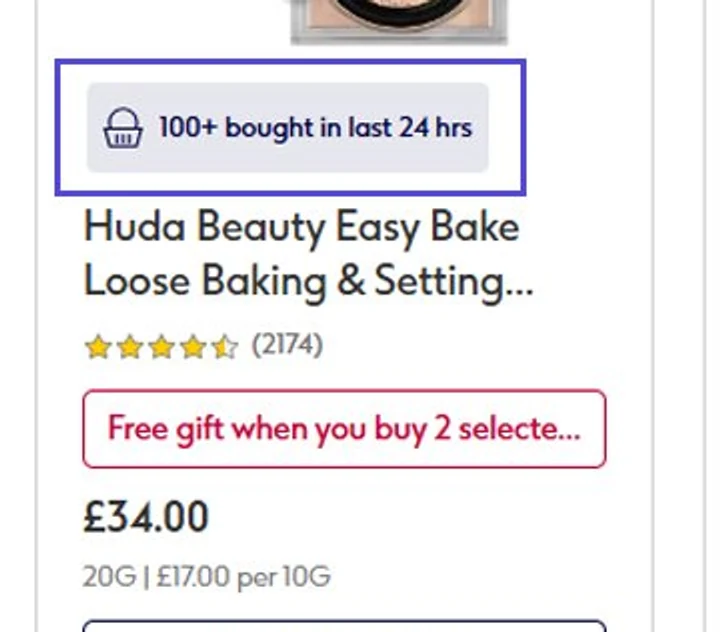
M&S, Amazon, Boots, SHEIN, Revolve and ASOS all print the same kind of proof on a product page: a number about a population, not a story about a person.
10 min read
M&S, Amazon, Boots, SHEIN, Revolve and ASOS all print the same kind of proof on a product page: a number about a population, not a story about a person.
13 min read
Real sold counts, best-seller badges and live cart activity convince shoppers without inventing urgency — and every number can be traced to your own orders.
7 min read
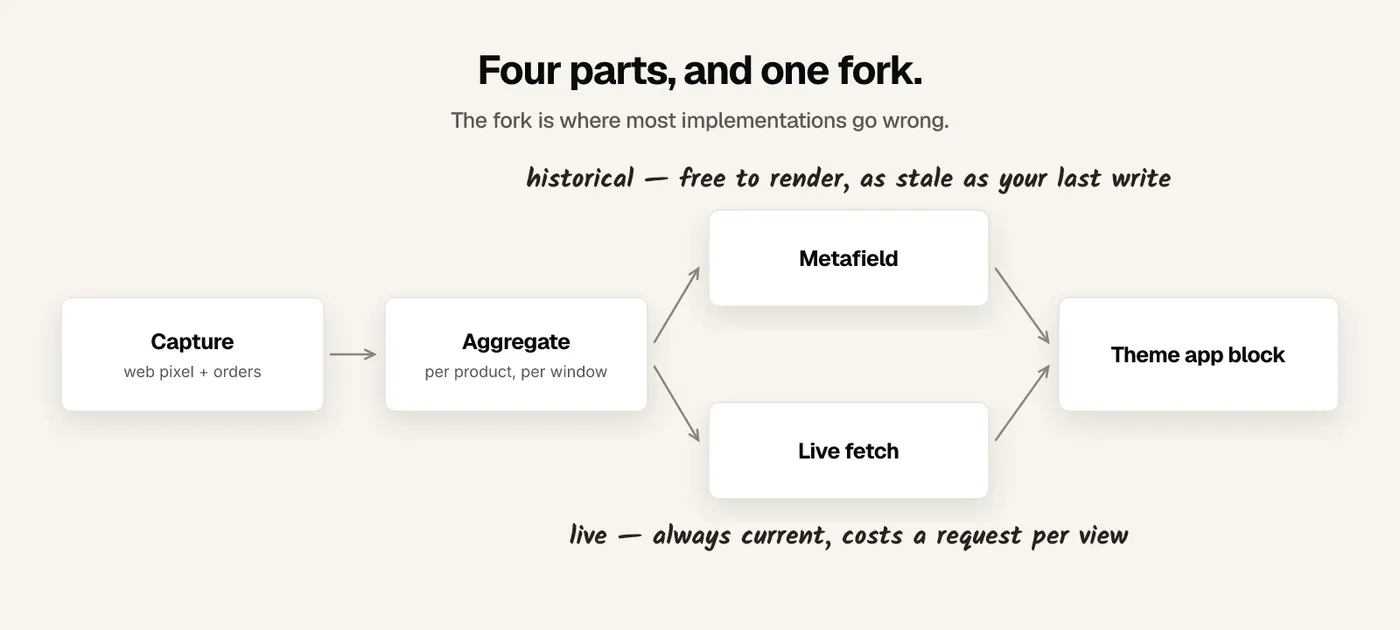
At catalogue scale the metafield path has its own ceiling: writes are batched and rate limited, so 40,000 products is a job to schedule, not a loop to run.
5 min read
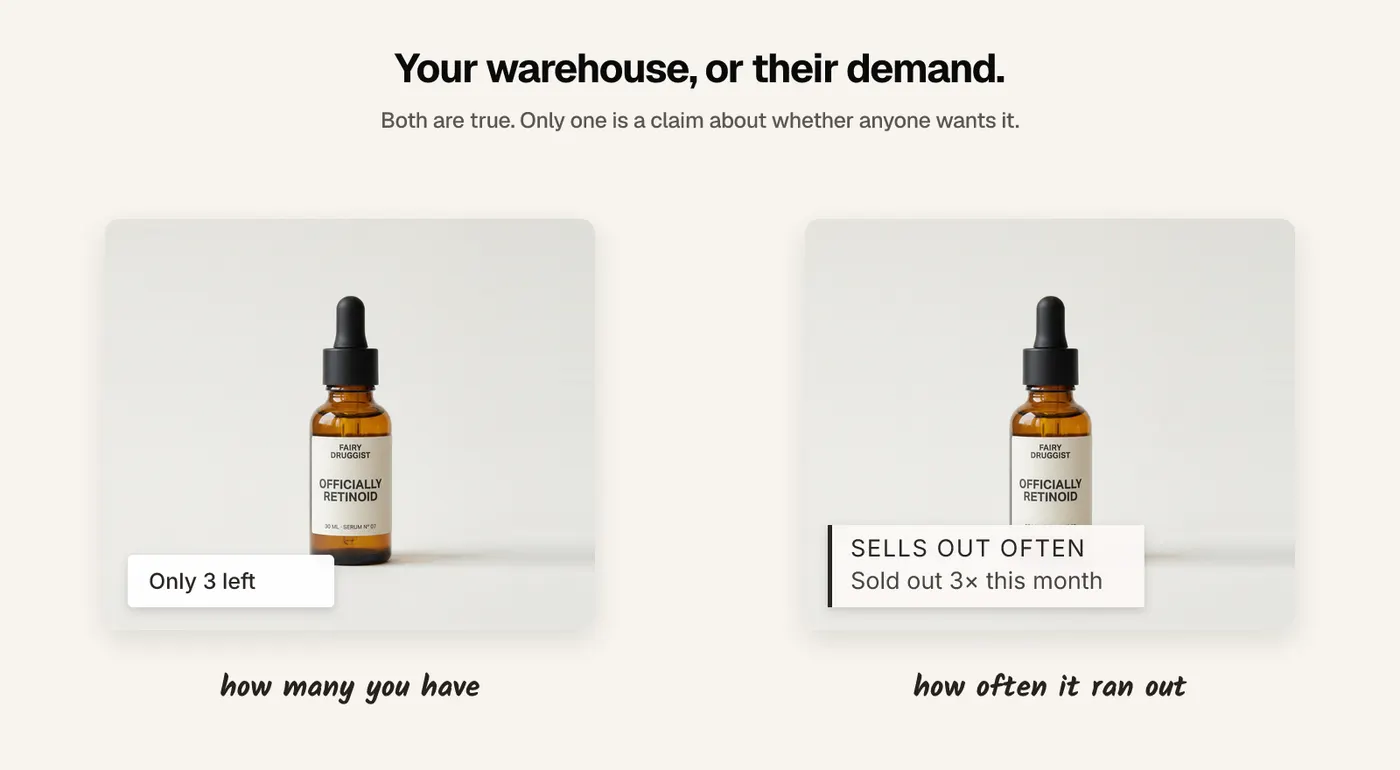
Something backed by what actually happened: how many times the product has sold out, when it was last restocked, how long it stayed gone, or a plain sold count.
6 min read
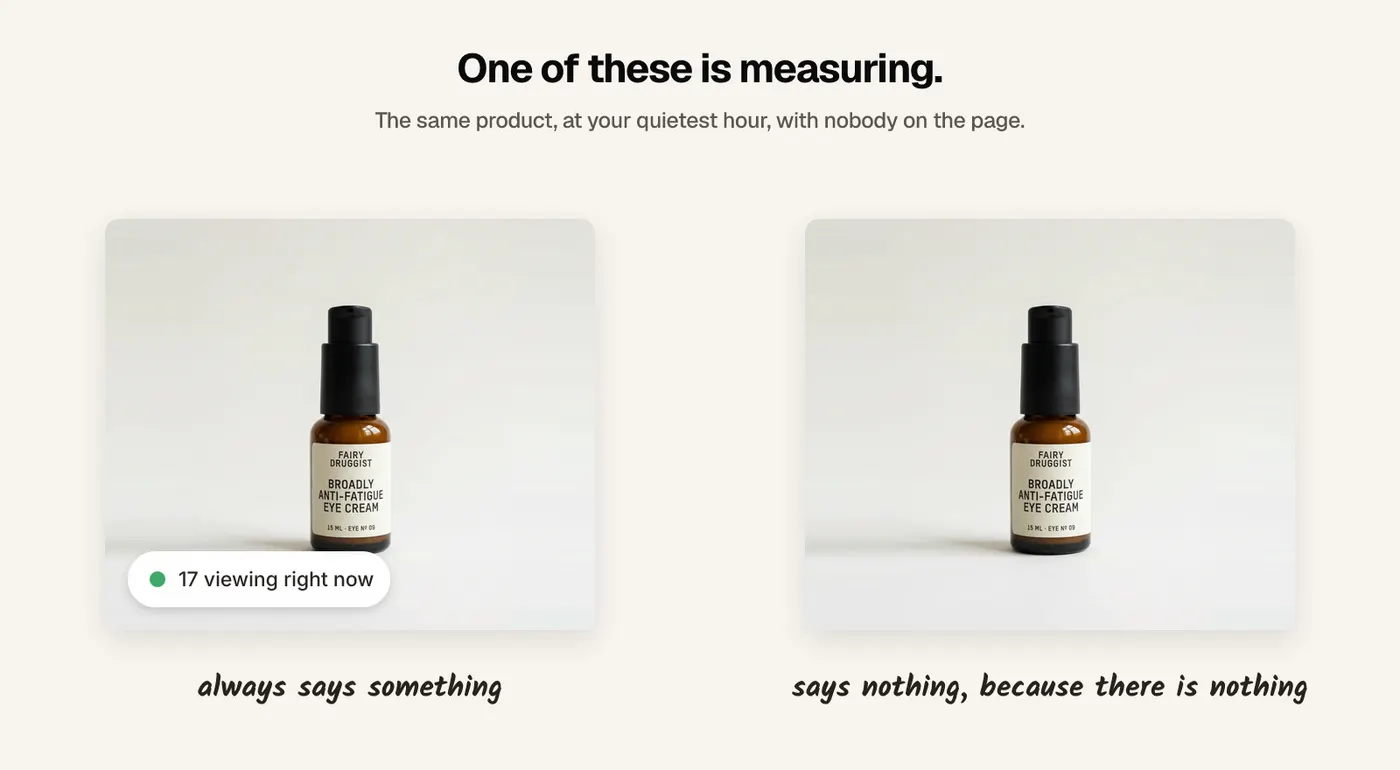
Here is the one question that separates them from the ones that measure, and three ways a number can be real and still mislead.
7 min read
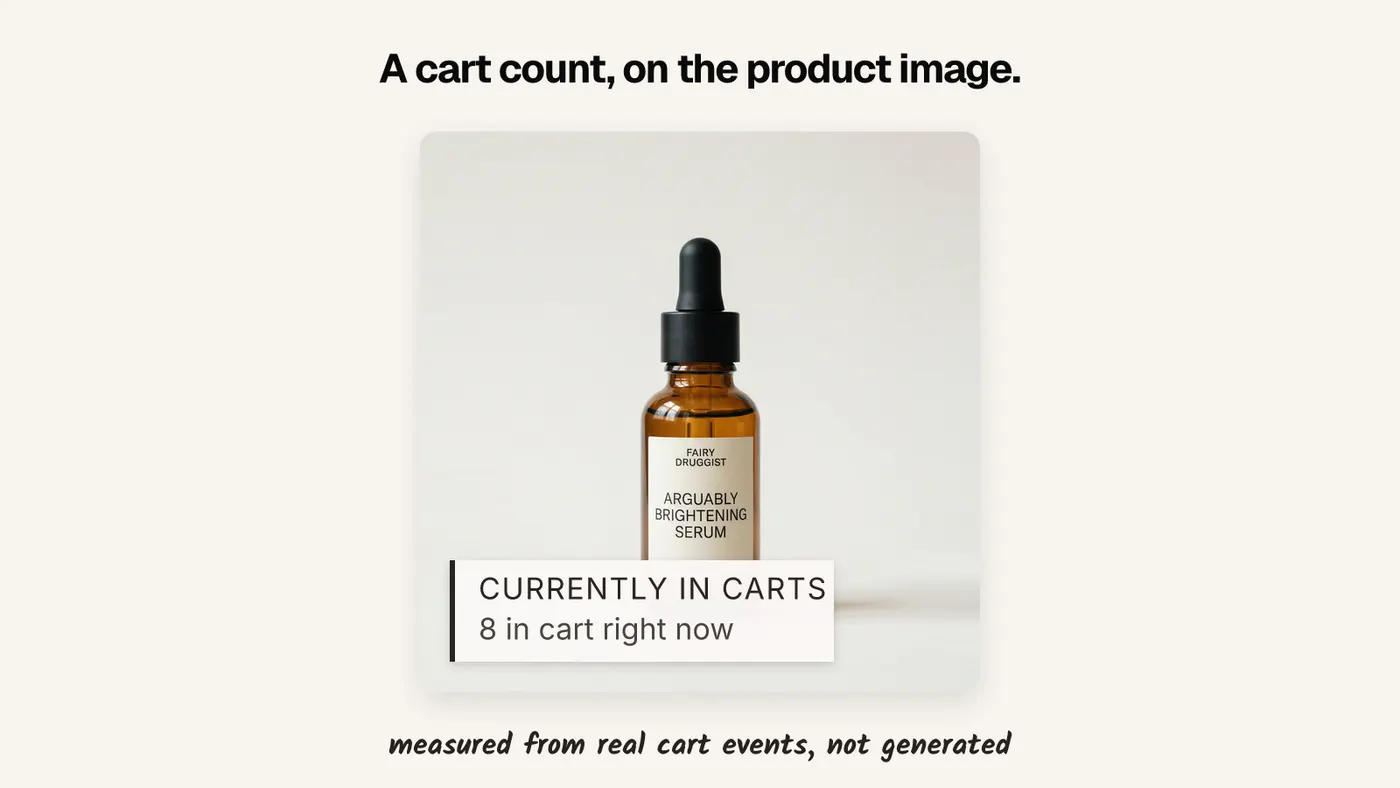
Here is what it takes to put a real '8 added to cart' label on a product page or a collection grid, and how to tell a measured count from a generated one.
5 min read
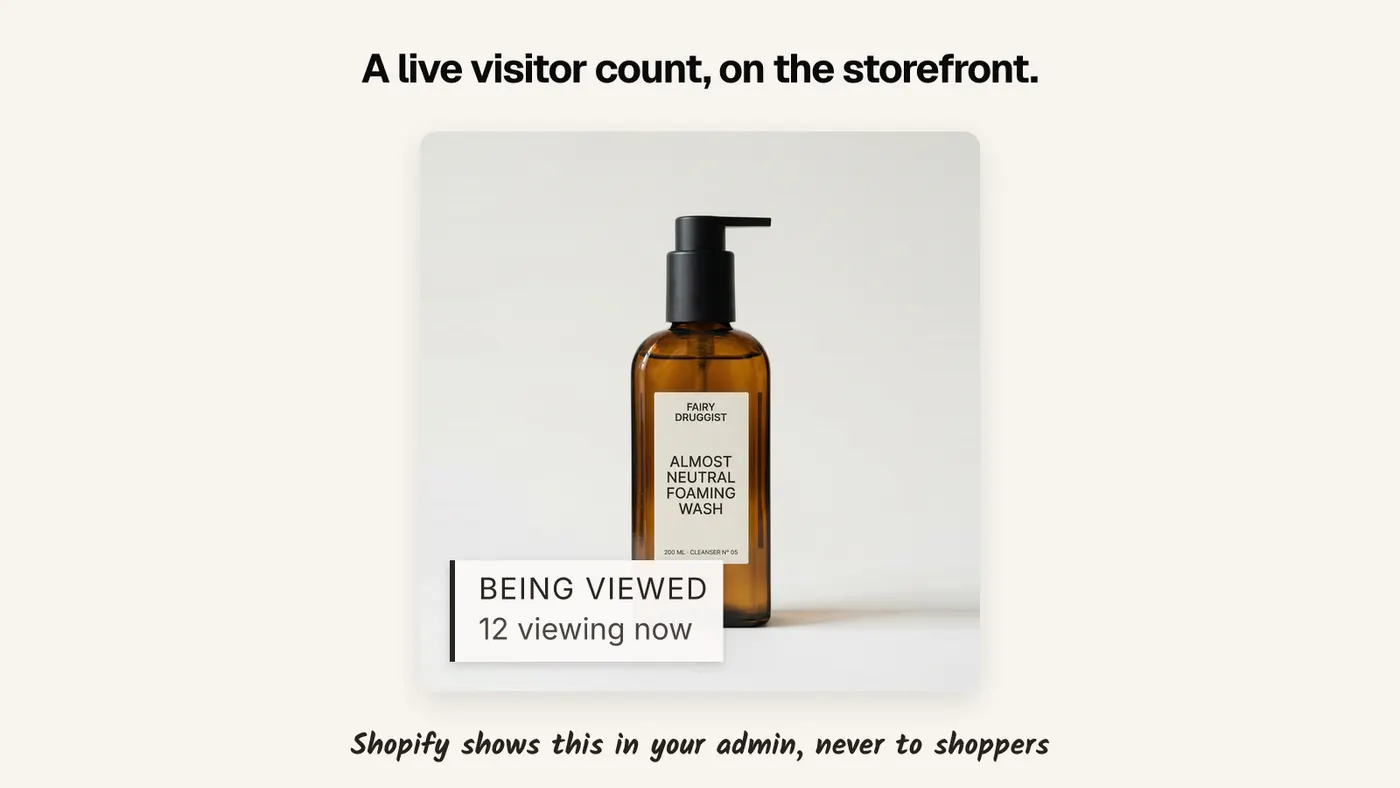
A small endpoint that accepts a heartbeat containing a product ID and an anonymous session ID, a store that expires entries after 60 seconds, and a count query.
5 min read
Social proof does not have to arrive as a corner toast. Here are the three places a sales counter can live on a Shopify page, and how to build each one.
5 min read
Shopify has no built-in way to display units sold on a product page. Here are the three ways to do it, what each one costs, and when each one breaks.